
What Experts Say
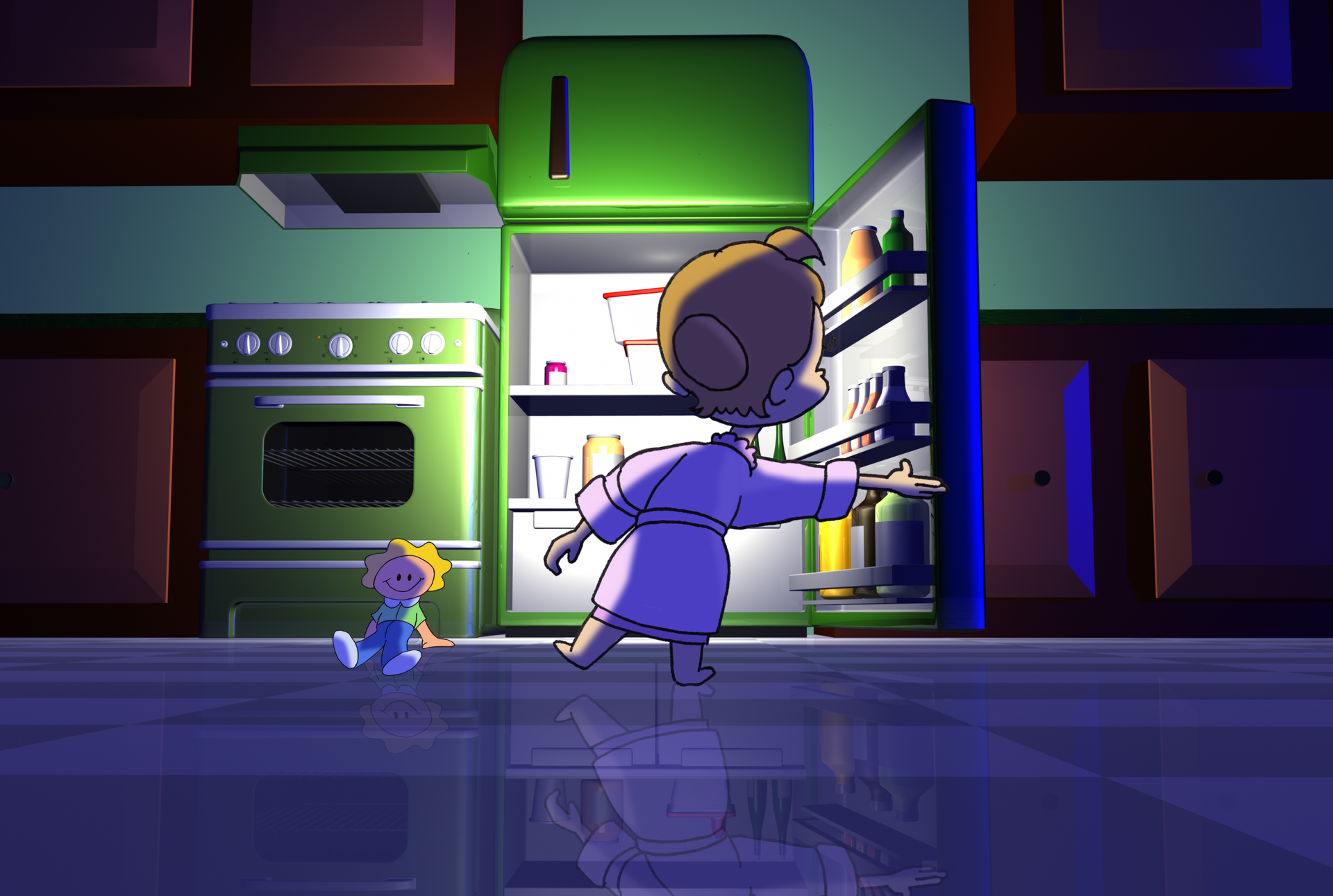
- Reviews focusing on software for young children have shown that, apart from static pictures, in particular animated pictures can be helpful additions to stories (Kamil et al., 2000; Zucker et al., 2009; Van Daal and Sandvik, 2011).
- If electronic books contain animated pictures this supports learning even in the absence of parental mediation (Strouse et al., 2013).
- Recent studies show that motion pictures built in storybooks make picture storybook exposure
– one of the strongest incentives for developing language and literacy skills in the preschool age (Snow et al., 1998) – even more effective (e.g., Ricci and Beal, 2002; Segers et al., 2006; Verhallen et al., 2006; Segal-Drori et al., 2010; Homer et al., 2014).
Auditory and visual stimulation
Lessons get embedded better when children
learn through a character. As children view animations, they use a range of senses — accelerating the auditory and training the visual. It encourages the brain to automatically make connections leading to better retention and recognition of objects.
August 2022
Psychological Impact and Influence of Animation on Viewer's Visual Attention and Cognition
From National Institute of Health (NIH)
Animation has influenced the viewer's visual attention through the integration of the different stimuli and the highly organized presentation. Furthermore, the animation has also aided the viewer in attaining greater conceptual understanding, thereby facilitating their cognitive response. As a result, the
animation was found to be helpful in enhancing learning skills.
Industry research suggests short video lessons can improve engagement by up to 50% compared to traditional approaches. Microlearning – delivering content in bite-sized chunks – can dramatically extend engagement by changing how information is delivered.
Animation promotes social and educational inclusion, helping children with varying needs engage confidently with the same content as their peers. Simple, clear animations with minimal distractions tend to be most effective for diverse learners.
Animation directs and demands attention.
When compared to a live action or photorealistic method, it’s much easier to direct learner attention using the simplistic and graphic foundation of animation. That’s because the brain is better trained to look for and understand simpler images

Published in Frontiers in Psychology 2016
From National Institute of Health (NIH)
The present study provides experimental evidence regarding 4–6-year-old children’s visual processing of animated versus static illustrations in storybooks. Thirty nine participants listened to an animated and a static book, both three times, while eye movements were registered with an eye-tracker. Outcomes corroborate the hypothesis that specifically motion is what attracts children’s attention while looking at illustrations. It is proposed that animated illustrations that are well matched to the text of the story guide children to those parts of the illustration that are important for understanding the story. This may explain why animated books resulted in better comprehension than static books.

Journal of Economics and Economic Education Research 2017
Problem solving
Research shows that merging and isolating images can help children understand how objects are in motion. Making sense of these dualities enables children to solve daily-life complex problems.
Creativity
Children are innately creative. However, as life progresses, their creative streak may diminish — and animation can counteract that. The inclusion of technology in your child’s life can ensure that their creative juices are flowing. Adding a storyline to this process can promote effective communication and enables children to discover the meanings of their lived experiences.
Critical thinking
Animated videos describe common situations in unique representations, which can stimulate a spirit of thinking and discussion. These discussions can encourage children to enhance their ideation and critical thinking skills while also developing effective verbal skills. As animations are an amalgam of academics and creativity, they open new possibilities for children to explore and understand the world around them and form opinions.
Memory enhancement and brain growth
Research shows that moving image encourages new neurons to grow and help link to areas in the brain responsible for memory formation, spatial orientation, and strategic planning. Thus, animated videos can lead to brain growth three times and enrich memory by approximately 65%.
Making sense of space
Animations enable children to relate the location, size, and shape of different objects and put them in relation to one another. It helps children make sense of their surroundings and understand them on a personal level.
Personality development
Using animation, instead of just speech, as a teaching tool has proved to be favorable in a child’s learning experience. It allows a child to use different skills simultaneously to create different connections and make their learning experience worthwhile.
Auditory and visual stimulation
Lessons get embedded better when children learn through a character. As children view animations, they use a range of senses — accelerating the auditory and training the visual. It encourages the brain to automatically make connections leading to better retention and recognition of objects.